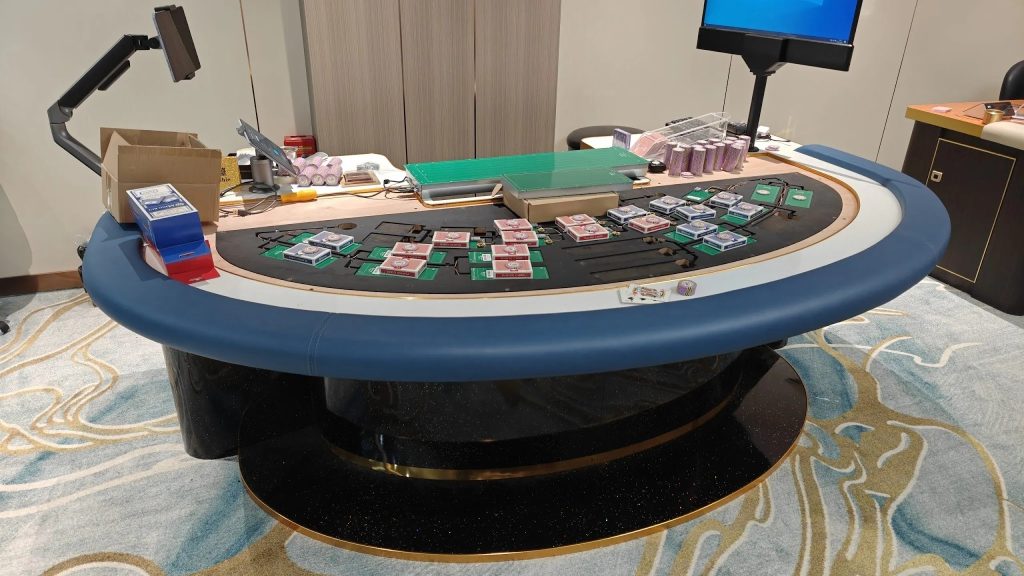
In 2026, Baccarat remains one of the most popular and highest-revenue table games in casinos worldwide, particularly in Asian markets. To meet the demands of high-speed play, large betting volumes, and strict regulatory requirements, casinos are increasingly adopting Baccarat tables with RFID card readers. This advanced technology combines precision engineering with real-time data processing to enhance game integrity, speed, and operational efficiency.
Core Technical Architecture of RFID Baccarat Tables
A modern Baccarat table with RFID card reader is a sophisticated multi-layered system designed specifically for the unique flow of Baccarat:
- Embedded RFID Antenna Grid: High-frequency (13.56 MHz) antennas are precisely laid out beneath the felt in key reading zones — typically the Player hand area, Banker hand area, and sometimes the Tie area. These antennas create focused electromagnetic fields capable of reading multiple tags simultaneously with high accuracy.
- RFID-Enabled Playing Cards: Cards used on these tables contain ultra-thin passive RFID inlays embedded between the layers. Each card carries a unique encrypted ID linked to its rank and suit. The tags are engineered to be nearly undetectable in terms of weight, thickness, and flexibility, ensuring normal shuffling and dealing feel.
- RFID Smart Chips: Betting chips with embedded RFID tags allow the system to automatically detect and record exact bet amounts placed on Player, Banker, Tie, or side bets (such as Pair, Super Six, etc.).
- Central Processing Unit: Shielded readers and processors underneath the table handle signal decoding, anti-collision algorithms, and real-time data transmission to the dealer’s display and the casino’s central management system (CMS).
- Dealer Interface: A compact, ergonomic touchscreen shows real-time game status, bet totals, and results without revealing hidden information.
How RFID Card Reading Works in Baccarat?
The process is seamless and fast:
- The dealer deals the initial cards face-down into the designated Player and Banker reading zones.
- The table’s antennas instantly read the RFID tags on the cards.
- The system automatically determines the hand values (including natural wins) and displays the result on the dealer screen.
- All betting data from RFID chips is simultaneously recorded and validated.
This entire reading and result calculation happens in milliseconds, significantly reducing the time needed for manual card scanning and result announcement — a major bottleneck in traditional Baccarat games.
Key Technical Advantages
1. Exceptional Game Speed
Traditional Baccarat can be slowed by card handling and manual result verification. RFID card readers can increase hands per hour by 25-45%, directly boosting table revenue in high-limit rooms where Baccarat dominates.
2. Enhanced Security and Anti-Fraud
The system can detect counterfeit cards, tampered tags, or unauthorized card substitutions in real time. Every card dealt is logged with a digital fingerprint, creating an immutable audit trail that is invaluable for surveillance and regulatory compliance.
3. Accurate Betting Tracking
With RFID chips, the table automatically calculates total bets on each outcome (Player/Banker/Tie) and side bets. This eliminates manual counting errors and provides precise data for pit management and financial reporting.
4. Superior Dispute Resolution
In cases of disagreement over card values or betting timing, the system provides objective, timestamped digital evidence, reducing conflicts and protecting both players and the casino.
5. Advanced Data Analytics
The technology feeds rich data into casino management systems, including bet patterns, game duration, player behavior, and table performance metrics — enabling better staffing decisions and marketing strategies.
Technical Challenges and Solutions
Implementing RFID Baccarat tables requires attention to several engineering aspects:
- Electromagnetic Shielding to prevent signal interference between nearby tables.
- High Durability of the felt and embedded components to withstand heavy use and frequent cleaning.
- System Redundancy to ensure continuous operation even during network issues.
- Regular Calibration of antennas to maintain reading accuracy over time.
Leading manufacturers address these through robust materials, modular designs, and comprehensive maintenance support.
Future Technological Evolution
In the coming years, Baccarat tables with RFID card readers are expected to integrate with:
- AI-driven pattern recognition for responsible gaming alerts
- Real-time live streaming and broadcasting capabilities
- Contactless betting interfaces
- Deeper integration with unified casino analytics platforms
These advancements will further solidify RFID as a core component of the “Smart Casino” ecosystem.
For casino operators seeking in-depth technical insights and implementation strategies for 2026, MacauMr has published a detailed industry guide:
RFID Casino Gaming Tables: The 2026 Must-Have Upgrade for Smart Casino Operations
To explore specific Baccarat table configurations and RFID card reader specifications, visit:
RFID Poker & Baccarat Table Solutions

As highlighted in Casino.org article Vegas Myths Busted: Casinos Cheat You Illegally, RFID technology in gaming tables is fundamentally a tool for transparency, security, and operational excellence rather than any form of manipulation. In the high-stakes world of Baccarat, this technology is proving to be a genuine advancement.

