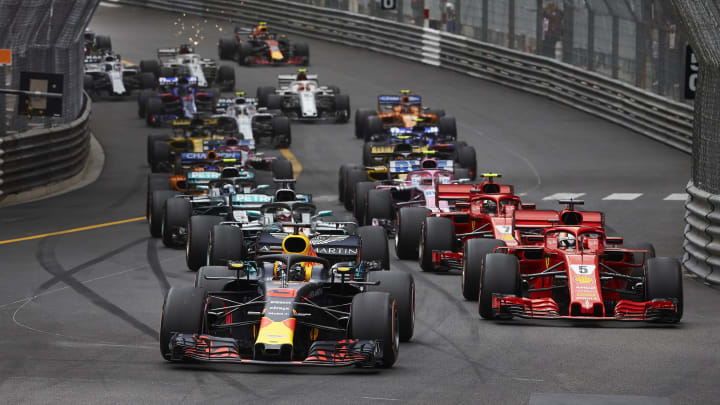
The Monaco Grand Prix is a prestigious F1 race where precision driving counts more than power and speed. The drivers must complete 78 laps, which takes about two hours. Lando Norris was the winner of the race last year. The event often attracts many high-net-worth individuals who regard it as a cultural phenomenon and not just a race.
The history
The organizer of the Monaco Grand Prix was the Automobile Club de Monaco, and the race dates to 1929. Some iconic drivers have taken part in the race over decades, such as Ayrton Senna, who has the record for the most wins.
Mastery of this circuit is much more about control and finesse rather than speed. With the streets so narrow and all the barriers in the way, the race evokes traditional rather than modern races, making the atmosphere unique. It provides a technical and strategic challenge for teams.
At the next Monaco Grand Prix in June, the race schedule is much the same as in previous years. Practice sessions will happen on Friday and Saturday afternoons. There is also a qualifying race later on Saturday. On Sunday is the Driver’s Parade, and after that is the main event.
Visitors to Monte Carlo can pay a visit to many of Monte Carlo’s famous sites, including the world-famous Monte Carlo Casino, which drips in luxury. They can also place online bets on their favorites to win F1 races using a sports betting app.
In 2026, all the top teams and drivers will be back. The teams include Red Bull, McLaren, Mercedes, and Ferrari. Top drivers include Max Verstappen, Lewis Hamilton, and Lando Norris.
Prestige beyond the podium
Winning in Monaco often helps define a driver’s career. The race is part of the ‘Triple Crown of Motorsport,’ of which the other events are Le Mans and the Indianapolis 500. Graham Hill is currently the only driver to have won the Triple Crown.
Drivers know that one mistake in Monaco, such as a misjudged corner, can instantly end the race for them. They must drop their speed around the Fairmont Hairpin, one of the tightest corners in motorsport.
Unlike modern racetracks with a focus on aerodynamic efficiency and power, this track places a premium on drivers’ skills. The drivers need to find a balance between exercising restraint and still being assertive on every lap.
Securing a front-row start is more important in this race than any other and can determine the eventual outcome. This is why drivers take the qualifying round on Saturday so seriously and push so hard.
Strategy and survival
Carefully managing their tire wear and pit stops can help teams to gain an advantage. They also need to adapt quickly when something unexpected takes place.
Because overtaking is difficult, drivers often find themselves in tense situations, stuck behind rivals lap after lap. If a car ahead goes into the pit, a car with clear air can set a fast lap and emerge ahead of the rival. The ability to drive at maximum speed without being stuck behind a slower car is highly valued.
Weather can transform the already challenging track into a nightmare as the rain pours down and visibility drops. In wet conditions, it is important to minimize pit stops and navigate the slippery streets without damage. In such conditions, Monaco has produced some memorable performances as seen in its history.
How fast do the drivers go?
In Monaco, the racetrack may be slow, but that doesn’t mean it lacks risk or danger. It rewards perfection rather than raw speed. The average speed on the circuit is about 93 miles per hour, and less than half of a lap is spent at full throttle. In the fastest sections, speeds may reach a maximum of about 180 to 183 miles per hour. Lewis Hamilton holds the official lap speed record.

