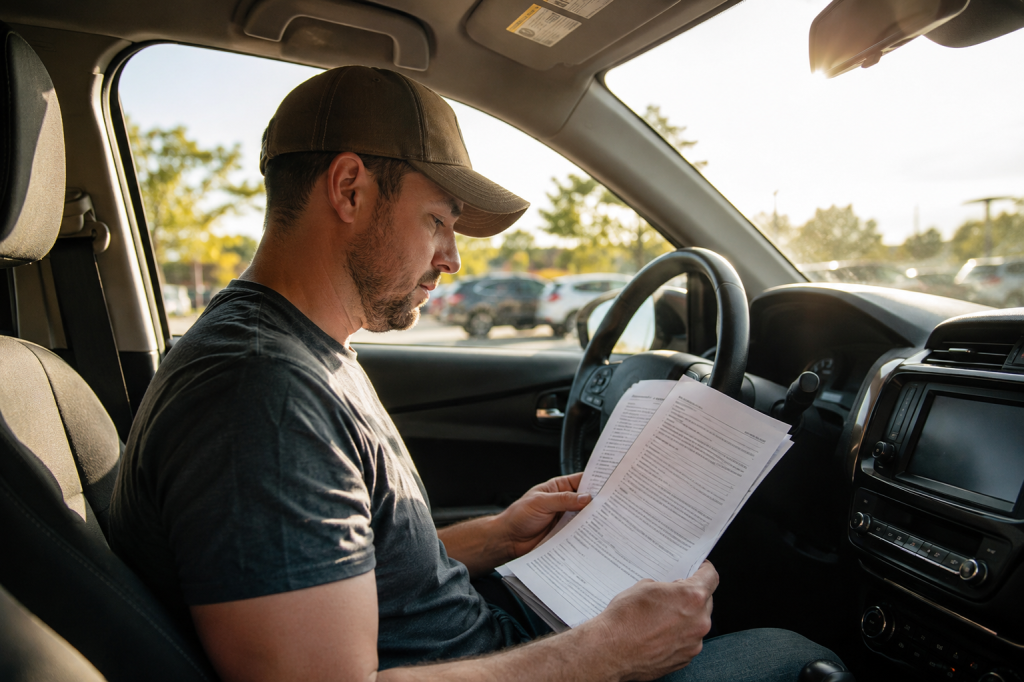
Most Texas drivers know they are required to carry car insurance. Fewer understand what the coverage they are paying for actually does, or what it deliberately does not cover. That gap matters most after an accident, which is exactly the wrong time to find out your policy works differently than you assumed.
Here is a plain breakdown of how Texas coverage options work and what each one is actually for.
What the State Requires
Texas law requires every driver to carry liability insurance at minimum limits of 30/60/25:
- $30,000 per person for bodily injury
- $60,000 per accident for bodily injury
- $25,000 for property damage
These are the numbers that have been on the books since 2008. Vehicle repair costs and medical bills have both risen considerably since then, which is part of why carrying only the state minimum is riskier today than it was when those limits were set.
One thing worth understanding clearly: liability coverage pays for the other party’s losses when you are at fault. It does not pay for your own injuries or your own vehicle’s damage. Those require entirely separate coverage.
PIP: The Coverage That Is Already in Your Policy
Personal Injury Protection (PIP) pays for your medical expenses and lost wages after an accident regardless of who caused it. Texas insurers are required to include it in every policy by default. The minimum offered is $2,500, though higher limits are available.
You can decline PIP in writing. A lot of drivers do, often without realizing what they are giving up. If you have strong health insurance that covers accident-related injuries, declining PIP is defensible. If your health coverage has gaps or high deductibles, keeping PIP is cheap protection against a meaningful financial exposure.
Uninsured Motorist Coverage: Optional but Practical
Texas does not require uninsured motorist (UM) or underinsured motorist (UIM) coverage, but insurers must offer it. You can decline it in writing, and it gets declined often.
The reason is worth reconsidering: approximately 13.8% to 20% of Texas drivers carry no insurance at all according to the Insurance Research Council and the Texas Department of Motor Vehicles respectively. If an uninsured driver hits you and is at fault, your liability coverage pays nothing toward your injuries or your vehicle. That is what liability covers: the other party’s losses, not yours.
UM coverage fills that specific gap. UIM coverage steps in when the at-fault driver has some insurance but not enough to cover the full damage. Given the uninsured driver rate in Texas, both are worth carrying.
Collision and Comprehensive: What They Actually Cover
These two are often grouped together as “full coverage” but they protect against different things.
Collision pays for damage to your own vehicle after an accident, regardless of fault. Comprehensive covers non-collision events: theft, vandalism, hail, flooding, fire, and hitting an animal.
If your vehicle is financed or leased, your lender requires both. If the car is paid off, carrying them is a choice based on the vehicle’s value. The Dallas-Fort Worth area sits in what insurers call Hail Alley, averaging multiple significant hail events per year. For drivers in North Texas specifically, skipping comprehensive coverage is a calculated risk that does not always pay off.
Putting It Together
Texas is an at-fault state. The driver who caused the accident is financially responsible for the other party’s losses. The coverage options above work together to address the various scenarios where your own financial exposure could be significant: your injuries, your vehicle, the other party’s losses, and situations where the at-fault driver has no insurance at all.
Drivers looking for affordable auto insurance in Texas can compare coverage options and pricing based on their specific situation, including which optional coverages make sense given their vehicle, health coverage, and local driving environment.

