There’s a moment many people don’t think about until it actually happens—standing in a hospital admitting room, holding papers, feeling rushed, confused, and slightly anxious. And in that moment, one thing becomes very clear: PhilHealth requirements matter more than you ever expected.
Because when health is on the line, paperwork suddenly becomes power.
In this guide, we’ll break down everything you need to know about PhilHealth requirements before hospital admission, why they matter, and how preparing them early can save you from stress, delays, and unexpected hospital bills.
What is PhilHealth?
PhilHealth (Philippine Health Insurance Corporation) is a government-run health insurance program in the Philippines. Its main purpose is simple but powerful: to help Filipinos reduce hospital expenses through health coverage and medical benefits.
Think of it as a financial safety net that activates when you need medical care—especially during hospitalization.
But here’s the catch most people ignore:
👉 PhilHealth benefits don’t automatically apply unless your membership and requirements are properly updated and verified.
That’s where things often go wrong.
General PhilHealth Requirements
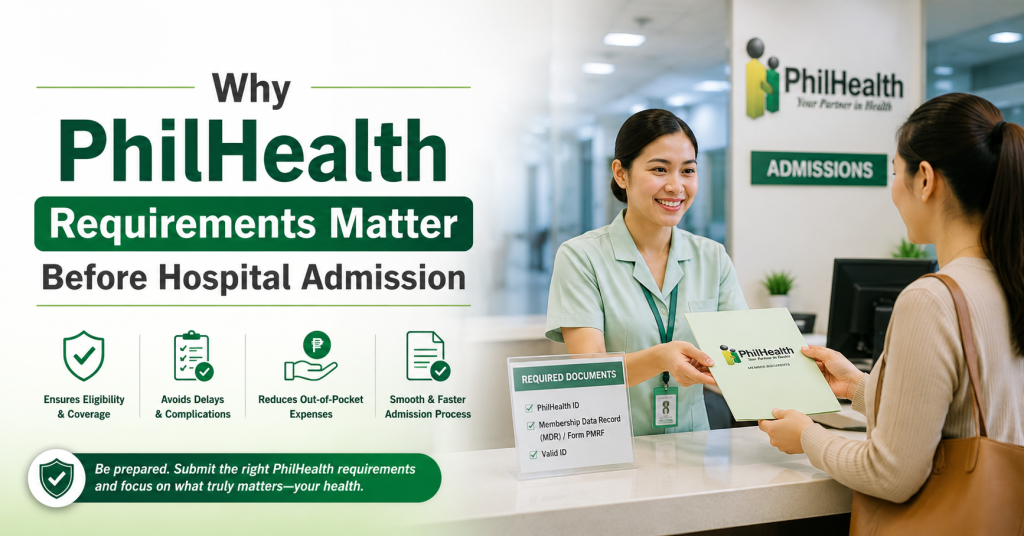
Before diving into categories, let’s understand the basic PhilHealth Requirements most members need:
- PhilHealth Member Data Record (MDR)
- Valid government-issued ID
- PhilHealth number
- Supporting documents (depending on status)
- Updated membership information
These may look simple on paper, but in real hospital situations, missing even one document can delay your claim.
And honestly, that’s where many people get caught off guard.
PhilHealth Requirements for Employed Members
If you are formally employed, your employer usually handles contributions—but responsibility is still shared.
Common requirements:
- MDR (Member Data Record)
- Certificate of Employment (sometimes required)
- Latest contribution record
- Valid ID
Employers usually remit contributions, but here’s the mistake many employees make:
👉 They assume everything is automatically updated.
In reality, outdated records can lead to PhilHealth claim issues during hospital admission.
PhilHealth Requirements for Self-Employed Individuals
For freelancers, business owners, and informal workers, things are more hands-on.
Requirements include:
- PhilHealth Member Registration Form (PMRF)
- Valid government ID
- Proof of income or business registration (if applicable)
- Payment receipts of contributions
This group often struggles because payments are irregular.
And here’s the truth:
👉 Even a small gap in contribution can affect eligibility during hospitalization.
That’s why regular updates matter more than people think.
PhilHealth Requirements for OFWs (Overseas Filipino Workers)
OFWs have their own structured coverage under PhilHealth, but documentation is still crucial.
Requirements:
- PMRF form
- Proof of overseas employment (contract or OEC)
- Valid passport
- PhilHealth contribution payment receipt
Many OFWs assume coverage continues automatically while abroad—but gaps can still occur.
And when emergencies happen back home, missing documents can create unnecessary stress for families.
PhilHealth Requirements for Students and Unemployed Individuals
Students and unemployed members are often classified under dependent or voluntary membership.
Requirements:
- Birth certificate (if dependent)
- Valid ID
- PMRF form
- Supporting documents from guardian (if applicable)
The common misconception here is:
👉 “I’m not working, so I don’t need PhilHealth.”
But in reality, maintaining membership ensures you’re protected in case of emergencies.
PhilHealth Requirements for Senior Citizens
Senior citizens are one of the most protected groups under PhilHealth.
Requirements:
- Senior Citizen ID
- Birth certificate or proof of age
- MDR (if available)
- Valid ID
Many seniors are automatically covered, but hospital delays still happen when records are incomplete.
And honestly, this is heartbreaking when it could have been avoided with simple preparation.
How to Register for PhilHealth
If you’re not yet registered, the process is straightforward:
Steps:
- Fill out PMRF (PhilHealth Member Registration Form)
- Submit valid ID and documents
- Visit a PhilHealth office or register through employer
- Receive your PhilHealth number and MDR
Once registered, always keep copies of your documents.
Because hospital admission is not the time to start searching for paperwork.
How to Update PhilHealth Membership Information
Updating your information is just as important as registering.
You need to update when:
- You change employment status
- You move address
- You get married
- Your dependents change
Requirements for updates:
- Updated PMRF
- Supporting legal documents
- Valid ID
This step is often ignored—but it is the difference between smooth approval and claim rejection.
Common Mistakes When Submitting PhilHealth Requirements
Let’s be honest—people make mistakes all the time. Some small, some costly.
Common errors include:
- Not updating MDR
- Missing valid ID
- Unpaid or inactive contributions
- Wrong personal information
- Assuming employer already updated everything
- Forgetting to bring documents during admission
And here’s the painful truth:
👉 Hospitals don’t wait for missing paperwork to be fixed.
Benefits of Completing PhilHealth Requirements
Now let’s talk about the positive side—because there is a big one.
Benefits include:
- Reduced hospital bills
- Faster admission processing
- Access to government health coverage
- Financial relief during emergencies
- Better hospital coordination
It’s not just paperwork—it’s financial protection when you need it most.
And honestly, most people only realize its importance when it’s already too late.
FAQs
What are PhilHealth requirements before hospital admission?
They include MDR, valid ID, PhilHealth number, and updated membership records.
Can I use PhilHealth without complete documents?
In some cases, yes—but it may delay claims or reduce benefits.
How do I check if my PhilHealth is active?
You can verify through PhilHealth offices or online membership verification systems.
Do unemployed individuals still need PhilHealth?
Yes, maintaining membership ensures coverage during emergencies.
Why is PhilHealth important in hospitals?
It helps reduce hospitalization costs and ensures financial support for medical care.
Conclusion
At first glance, PhilHealth requirements may feel like simple paperwork. But when hospital admission becomes real, those documents become something much more important—they become your protection, your savings, and your relief.
The truth is simple:
👉 Why PhilHealth requirements matter before hospital admission is not just about compliance—it’s about preparedness.
Because emergencies don’t wait. And neither should your documents.
If there’s one takeaway, it’s this:
Stay updated, stay prepared, and never assume your records are already in order.

