Shopping for a new accent seat sounds simple until you realize how many decisions hide behind that one purchase. Fabric, base type, swivel range, cushion density, room proportions, and long-term durability all quietly influence whether the piece becomes a favorite or a regret. A grey swivel chair, in particular, gets chosen for its versatility, but the same neutral appeal that makes it tempting can also mask real problems: the wrong undertone clashes with your walls, a cheap mechanism squeaks within months, and an ill-fitting silhouette makes an otherwise handsome room feel awkward. Before you click add-to-cart, it pays to understand where most shoppers go wrong. This guide walks through the traps that keep buyers coming back to return counters, offers plain-language advice on evaluating construction and comfort, and shows how a little planning up front can save you from months of buyer’s remorse. Read carefully, because the missteps below cost real money and real patience.
Ignoring the Undertone of Grey
Grey is not one color. It leans cool, warm, blue, green, brown, or even purple depending on the dye lot, fabric, and lighting in your room. Shoppers who grab the first grey they see often end up with a chair that fights their existing sofa, rug, or wall paint. A cool blue-grey chair placed beside a warm greige sofa reads as mismatched even when both technically qualify as neutral. The fix is straightforward but easy to skip: order a fabric swatch and hold it against every major surface in the room, in both daylight and evening light, before committing. If a swatch is not available, request high-resolution photography and compare it against the same undertones already at home. Pay particular attention to how the fabric behaves under warm bulbs at night, because incandescent and warm LED lighting can pull green or yellow tones out of a grey that reads perfectly neutral by day. A well-chosen grey swivel chair should quietly harmonize with the surrounding palette rather than compete with it, and small effort at this stage prevents the expensive return later.

Underestimating the Swivel Mechanism
The swivel is not a novelty; it is the reason the chair exists. Yet many buyers focus on the upholstery and treat the base as an afterthought. Low-quality mechanisms wobble, squeak, catch, or lose their smooth rotation within a season of ordinary use. Look for a heavy metal swivel plate rather than a lightweight stamped one, and confirm that the ball bearings are enclosed and lubricated. A return-to-center feature, sometimes called a memory swivel, is a nice bonus that keeps the chair pointed forward when you stand up, which matters in tidy living rooms where a permanently askew chair looks careless. Give the mechanism a real test in the showroom: rotate slowly, then quickly, then push it off-axis and let go. If you hear grinding or feel resistance, walk away. The best chairs spin with almost no perceptible sound. Ask, too, whether the mechanism is serviceable if it does begin to squeak years down the road, because a chair with a sealed unit that cannot be adjusted is essentially disposable the day the bearings wear.
Choosing the Wrong Base Style
Bases divide roughly into disc, star, pedestal, and sled-swivel silhouettes, and each communicates a different design language. A brushed metal disc reads contemporary, a wood pedestal reads warm and organic, and a four-prong star base reads mid-century. The trap is picking a base that clashes with the rest of the room. If your dining table has a black metal frame, a chrome swivel base in the same room will feel disjointed. Coordinate finishes deliberately, aiming for either a repeat of an existing metal or a genuinely contrasting accent rather than an accidental clash. Height also matters more than shoppers realize: a base that raises the seat higher than the adjacent sofa cushion breaks the visual line of the seating group and makes conversation feel uneven. Measure your sofa’s seat height before ordering and stay within roughly an inch of that number. Consider the flooring under the base as well, because a heavy disc on hardwood may need a discreet rug or felt pad to prevent scuffing during rotation.
Skipping the Comfort Test
Photos flatter every chair. A silhouette that looks inviting on screen can feel like a wooden bench in person if the cushion is under-filled or the seat depth is wrong for your body. Common comfort mistakes include buying a seat too deep for shorter frames, which forces the sitter to slouch, and buying a seat too shallow for taller frames, which leaves thighs unsupported. Back angle is another quiet failure point: a chair angled too upright feels formal and tiring, while one angled too far back makes reading or eating uncomfortable. Whenever possible, sit in the chair for at least ten minutes before buying, ideally with the same posture you would use at home, whether that means curling up with a book, leaning forward for conversation, or reclining to watch a screen across the room. If ordering online, prioritize retailers with generous return windows and read reviews that mention body type and sit-time. Cushion fill also deserves scrutiny; high-resilience foam wrapped in a feather-and-fiber blend gives the best mix of support and softness, and cushions that can be flipped or rotated will wear more evenly over the years.
Overlooking Fabric Performance
Grey shows less dust than white and less dirt than beige, but that does not mean any grey fabric is easy to live with. Loose-weave linens pill under friction, dark velvet attracts pet hair like a magnet, and untreated cottons absorb spills instantly. If the chair will live in a busy family space, ask for the fabric’s abrasion rating measured in double rubs, and aim for a performance textile designed to resist stains and fading. Boucle looks lovely in a styled photograph, but its loops snag on clawed paws and rough denim. Chenille is soft but flattens in high-traffic zones. A tightly woven polyester blend or a solution-dyed acrylic offers the best real-world durability while still delivering a refined look. CHITA LIVING and other brands that publish fabric certifications make this comparison easier because you can see the numbers rather than guess from a swatch. Pay attention to sunlight exposure too, since even performance fabrics can fade unevenly when a chair sits directly in a bright window all afternoon.
Forgetting the Room’s Proportions
Even the most beautifully constructed chair fails when it is the wrong size for the space. Buyers routinely underestimate the footprint that a swivel chair actually occupies, because the swivel itself requires clearance to rotate without hitting a coffee table, side table, or wall. A chair that looks compact on paper can feel bulky once you allow for that rotation radius. Sketch the floor plan, tape out the chair’s outline on the floor, and mimic the walking path around it before ordering. Pay attention to arm height as well; arms taller than the adjoining sofa arm create a stair-step effect that reads unsettled. Ceiling height and window scale matter too. A high-backed swivel chair in a low-ceilinged apartment can dominate the space, while a low-backed chair in a soaring loft may look undersized. Match the chair’s visual mass to the volume of the room, and remember that a swivel chair reads differently from every angle, so the side and rear silhouettes deserve as much attention as the front-facing view.
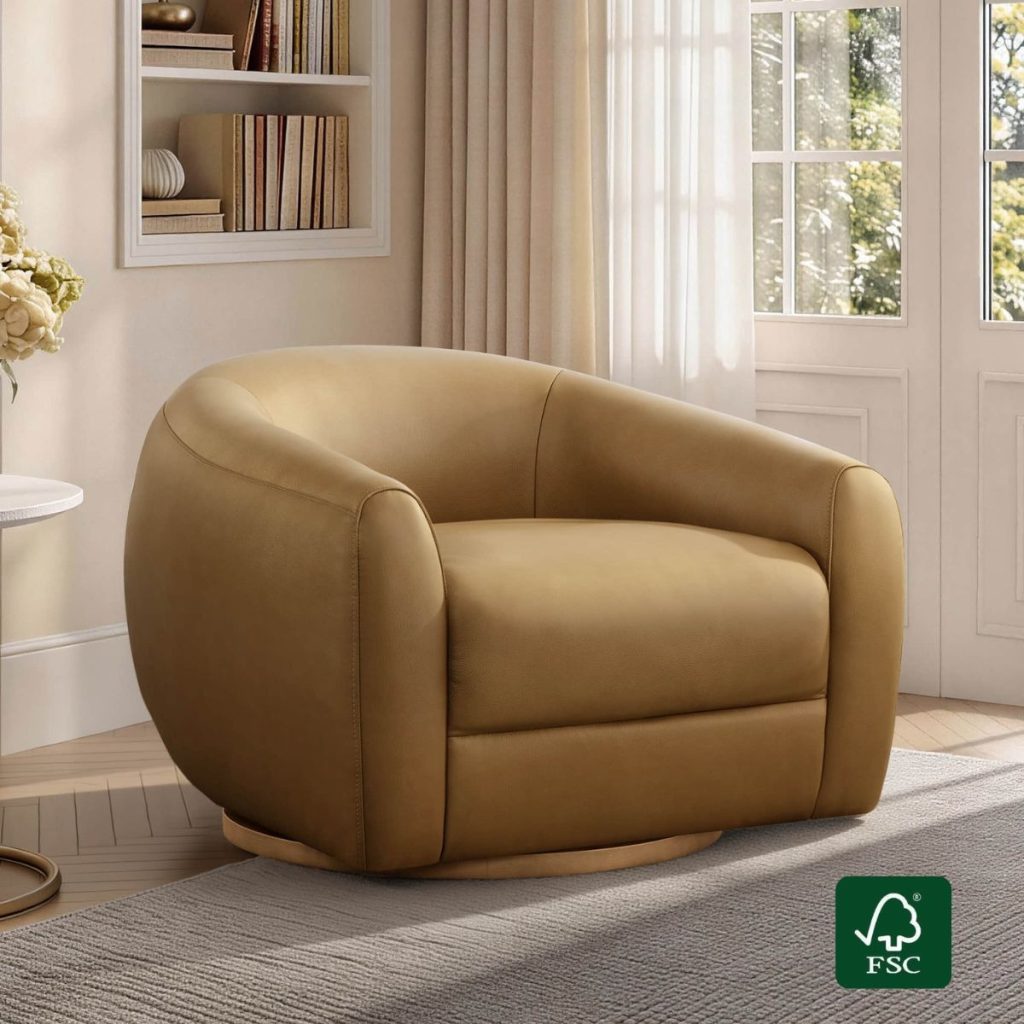
Overlooking Maintenance and Everyday Care
A beautiful chair still needs to be lived with, and maintenance requirements vary far more than most shoppers expect. Some fabrics come with removable, machine-washable covers, while others must be spot-cleaned by hand or professionally treated. Confirm the manufacturer’s cleaning code before buying, because a W-rated water-cleanable fabric behaves very differently from an S-rated solvent-only one, and using the wrong product can permanently scar the upholstery. Vacuum access matters too; tight cushion channels and skirted bases trap crumbs and pet hair that a standard nozzle cannot reach. Ask whether cushion covers unzip for interior cleaning, whether replacement fills are available years down the line, and whether the base can be wiped without stripping its finish. Households with children, pets, or frequent guests should lean toward removable covers and darker performance weaves, while quieter homes have more freedom to prioritize texture over resilience. Planning for care at the moment of purchase means the chair still looks composed after three years of ordinary life rather than tired and stained.
Trusting Price Alone as a Signal
A high price tag does not guarantee quality, and a modest price does not guarantee value. Some brands mark up the same imported frame that budget retailers sell, while other lower-profile makers use kiln-dried hardwood frames and eight-way hand-tied springs for less money. Read the construction details rather than the marketing copy. Look for terms like solid hardwood, mortise-and-tenon joinery, sinuous springs, and CertiPUR-US foam. Watch for red flags like particleboard frames, staples used in place of joinery, and vague warranty language. A well-built chair should carry at least a limited lifetime frame warranty and a multi-year mechanism warranty, because those two components are what fail first on poorly built pieces. Reviews written six or twelve months after purchase are more revealing than glowing first-week impressions, and photographs from real customers usually tell a truer story about color and scale than the styled shots on the product page.
Buying With Clear Eyes
A grey swivel chair earns its place in the living room by pairing the calm of a neutral palette with the daily pleasure of easy rotation. The catch is that the same versatility that makes it a smart choice also masks a long list of small decisions, and each of those decisions can quietly go wrong. By checking undertones against your existing palette, testing the swivel mechanism rather than trusting the photograph, matching the base to the room’s design language, verifying comfort with a real sit, choosing a fabric built for actual daily life, respecting the proportions of the space, planning for the maintenance your household will realistically deliver, and reading construction specs instead of price tags, you turn a potentially frustrating purchase into a piece that quietly earns its keep for years. Slow down at the shopping stage, ask the questions above, and you will avoid the pitfalls that send other buyers back to the return counter with regret. The right chair rewards patience, and patience begins with knowing exactly where the traps lie.

