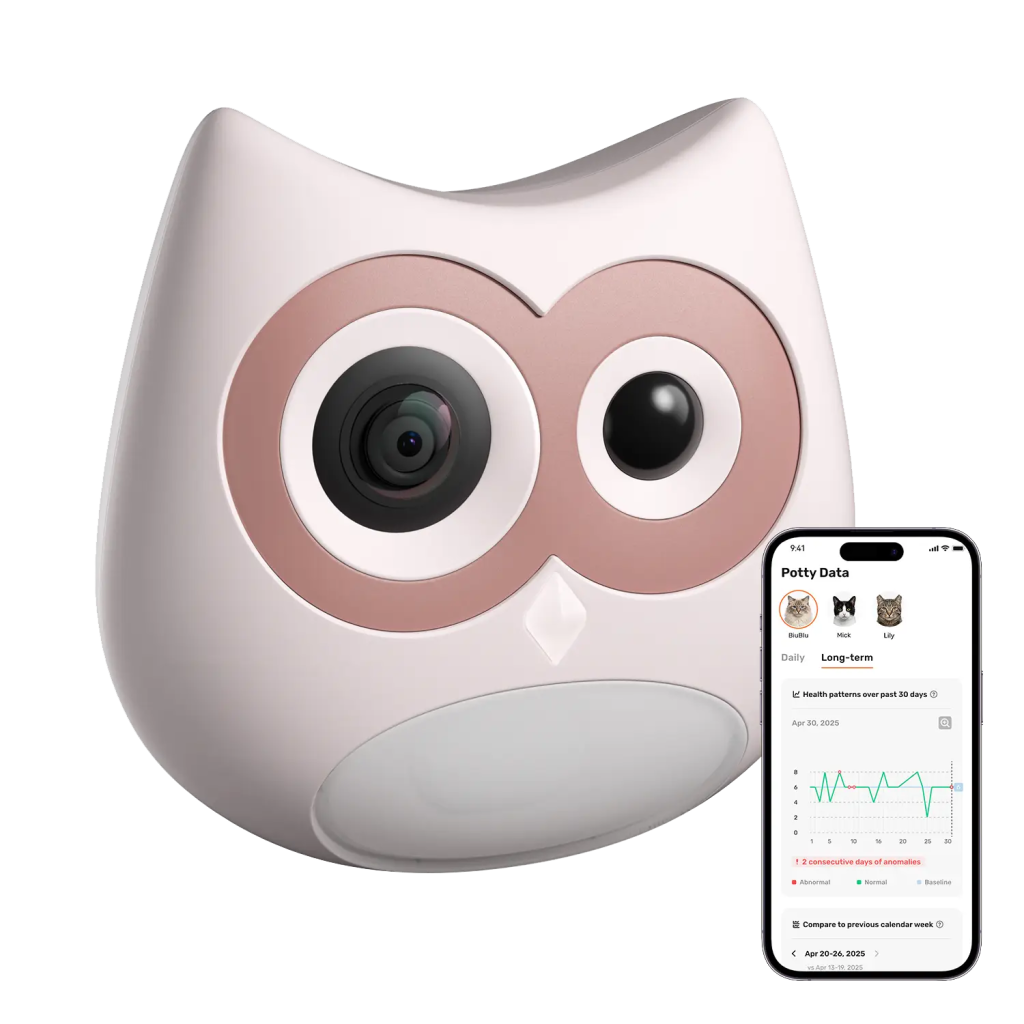
Cats are quiet communicators. They will not tell you when their stomach hurts, when they are drinking too little, or when a new visitor to the litter tray is stressing them out. By the time most owners notice a problem, the cat has often been suffering in silence for days. The good news is that a small piece of hardware placed near the litter area can now do the noticing for you, capturing the exact moments that matter most for feline health. This guide walks through the practical benefits of a litter box camera, what it actually reveals, and how to use it without turning your home into a surveillance lab. If you are tired of guessing whether Whiskers really used the box last night, keep reading.
Why the Litter Area Tells You More Than Any Other Spot
Vets have said it for decades: changes in urination and defecation are among the earliest, most reliable signs that something is wrong with a cat. Frequency, posture, duration, color, and even the sound a cat makes while eliminating can all shift days or weeks before more obvious symptoms like weight loss or vomiting appear. The trouble is that most owners are asleep, at work, or simply in another room during those key moments. That is exactly the gap a modern litter box camera is designed to close, capturing behavior at the one place your cat visits with predictable regularity.
Unlike a general pet cam pointed at a couch, a dedicated litter monitor sits close to the tray and focuses on a small, consistent scene. That framing matters. It filters out the noise of daily life and gives you a clean, comparable record from day to day. Over a week or two, patterns emerge that no human could reliably track by memory alone.
Turning Guesswork Into a Timeline
The first thing most owners notice after installing a camera near the litter box is how often they were wrong about their own cat. Cats you thought used the box twice a day may actually be going five times. A cat you assumed was drinking plenty may be producing surprisingly little output. A cat you were sure was healthy may be spending an unusual amount of time crouched with nothing happening, a classic warning sign of a urinary blockage in males.
With a timestamped feed and automatic clip saving, each visit becomes a data point. You can scroll back and see: 6:12 a.m., a quick urination, thirty seconds; 11:47 a.m., a longer visit, ninety seconds, then the cat left and came right back. A pattern like that becomes very easy to describe to a vet, and it turns a vague call about “he seems off” into a concrete conversation with real numbers.

That precision is where a lot of the daily time savings come from. Instead of squatting next to the tray after every meal or trying to catch the cat in the act, you check a phone notification while you finish coffee. If everything looks normal, you carry on with your morning. If something looks off, you have already captured the evidence.
Spotting Illness Before It Becomes an Emergency
The clinical value of watching the litter box comes from three main signals: how often the cat visits, how long each visit lasts, and what the visit looks like. A camera does not diagnose disease, but it makes the raw evidence available to a professional who can. Sudden increases in frequency can suggest urinary tract infection, diabetes, or kidney concerns. Sudden drops can suggest constipation, blockage, or a stressed cat holding it in. Long, strained visits with little output are a red flag that warrants a same-day vet call, especially in male cats.
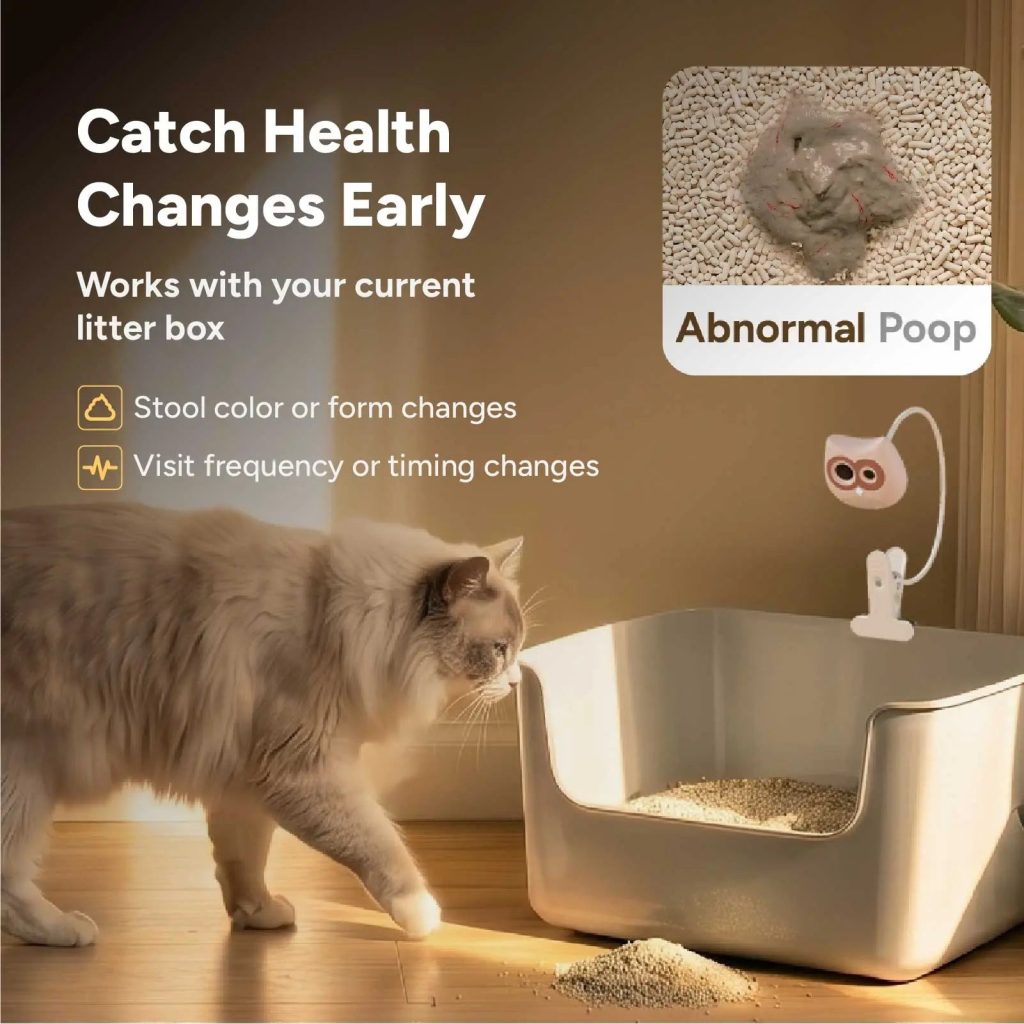
Behavioral changes matter too. A cat that used to enter the box calmly but now hesitates at the entrance, sniffs, backs out, and tries again may be associating the tray with pain. A cat that suddenly starts eliminating just outside the tray may be dealing with joint pain that makes climbing in uncomfortable. These are not things you can spot in a single glance, but they are obvious in a two-week video timeline.
The point is not to replace your vet. It is to walk into the appointment with a short, specific list: “Here is a clip from Tuesday, another from Thursday, and here is what the change looks like.” That kind of concrete evidence often speeds up diagnosis and reduces the number of trial-and-error tests. Fewer visits, faster answers, and less stress on the cat.
Multi-Cat Households and the Mystery Puddle Problem
Anyone with more than one cat has faced the moment of finding something in the tray and having no idea who left it. Was that unusually small stool from the senior tabby or the young ragdoll? Which of the four cats has been avoiding the covered box for two days? Without a camera, you are stuck guessing, and guessing wrong can delay treatment for the cat that actually needs it.

A camera solves this by pairing every event with a face. Modern devices can even automatically tag which cat entered the tray, so you get a per-cat log rather than a mystery pile of visits to sort through. That is enormously useful when only one cat in the household is showing symptoms or when you need to track how a new food, medication, or environmental change is affecting each animal individually.

It also settles disputes about litter box politics. If one cat is quietly bullying another and blocking access to the tray, you will see it. That kind of behavior is a leading cause of stress-related urinary issues in cats, and it is almost invisible without video. Fixing the layout, adding a second box, or adjusting feeding routines becomes a targeted decision rather than a wild guess.
Night Vision, Notifications, and the Rest You Actually Get
Cats are crepuscular. A lot of their tray activity happens at dawn, dusk, and the middle of the night, which is exactly when human observation is at its worst. Infrared night vision changes that. You get a clear black-and-white view of what happened at 3 a.m. without shining a light that would disturb the cat. If a cat is making unusual overnight trips or crying near the tray in the dark, a camera catches it.

Smart notifications add another layer. Rather than watching a live feed all day, you can set alerts for specific events: a visit that lasts too long, no visits at all in a defined window, or a sudden spike in frequency. Devices from companies focused on this niche, such as SiiPet, are increasingly built around these health-focused triggers rather than generic motion detection. The goal is fewer, more meaningful pings.
Once the system is dialed in, the mental load actually drops. You are not constantly wondering, “Did she use the box today?” You just trust that the system will tell you if something is worth checking. For anyone caring for a cat with a chronic condition, a senior cat, or a post-surgical patient, that peace of mind is hard to overstate.
Getting Real Value Out of the Camera in the First Week
The setup that pays off is boringly simple. Place the camera where it can see the entrance and inside of the tray without being knocked over. Give the cat a day or two to adjust, ignoring the device so they treat it as furniture. Then commit to reviewing the feed once a day for the first week to establish a baseline. Note the usual number of visits, the typical duration, and any consistent times of day.

Once you have that baseline, you can trust the system to flag deviations. A drop from four visits a day to one, or a sudden burst of eight, is meaningful only relative to what is normal for your cat. That is why the first week of watching is worth the effort, and it is also why long-term data is more valuable than a single dramatic clip. Chronic issues rarely announce themselves. They creep in slowly, and a camera is one of the few tools patient enough to notice.

It also helps to share access with anyone else involved in the cat’s care, whether that is a partner, a pet sitter, or a family member who feeds while you travel. When two people can pull up the same feed and see the same events, decisions about vet visits, food changes, or medication timing become far more coordinated. Cameras made for pet monitoring, SiiPet devices among them, typically support multi-user access without extra fuss.
Small Camera, Meaningful Answers, Calmer Days
A litter box camera is not a gadget for its own sake. It is a quiet tool that translates the most information-rich corner of your cat’s routine into something you can actually see, compare, and act on. The time savings come from replacing daily guesswork with a quick check. The health benefits come from catching subtle shifts weeks before they would become emergencies. And in multi-cat homes, the accountability alone is worth the setup. Point one at the tray, spend a week learning what normal looks like, and let it do the watching so you can go back to enjoying your cat instead of interrogating the litter.
Use up and down arrow keys to resize the meta box pane.
Use up and down arrow keys to resize the meta box pane.

