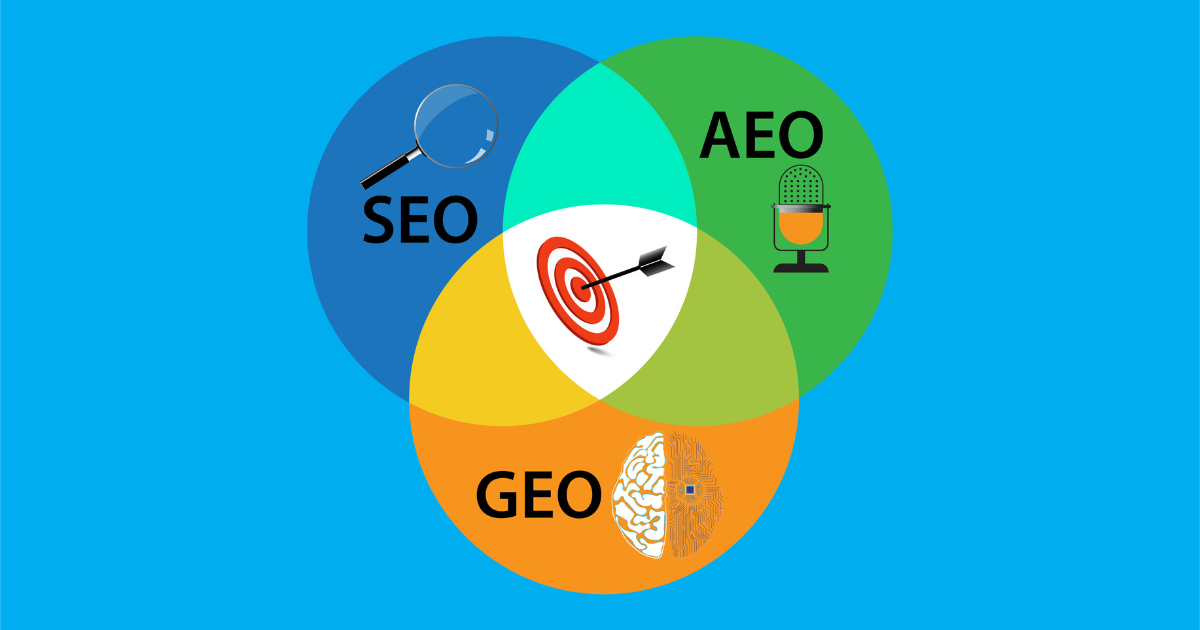
Three acronyms now dominate conversations about search visibility in 2026: SEO, AEO, and GEO. Each represents a different approach to a different type of search experience. And each requires different content strategies, different technical implementations, and different performance metrics.
Understanding the difference between these three disciplines is essential for any brand allocating search marketing budget in 2026. This guide explains exactly what each one is, how they differ, and which you should prioritize for your specific situation.
What Is SEO?
Search Engine Optimization is the practice of optimizing your website and content to rank higher in traditional search engine results pages. When a user types a query into Google or Baidu and sees a list of links, SEO determines which links appear and in what order.
SEO has been the foundation of organic search marketing for over 25 years. The core signals it optimizes include domain authority, backlink profile, page speed, content quality, keyword relevance, and technical website health.
SEO delivers results measured in ranking positions, organic traffic volume, and click-through rates from search result pages. It remains the largest and most established search marketing discipline.
What Is AEO?
Answer Engine Optimization is the practice of structuring content to appear as the direct answer to a specific query in search results. AEO targets featured snippets, People Also Ask boxes, voice search responses, and other zero-click search formats where a user gets their answer directly on the search results page without clicking through to a website.
AEO became strategically important as Google expanded its featured snippet and direct answer formats. A well-executed AEO strategy positions your content as the definitive answer to specific questions in your industry, capturing high-visibility placement at the top of search results even when traditional organic rankings are contested by larger competitors.
What Is GEO?
Generative Engine Optimization Services address the newest and fastest-growing search format: AI-generated answers. When a user asks ChatGPT, Perplexity, Google AI Overviews, or Microsoft Copilot a question, the AI model generates a direct response rather than a list of links.
GEO optimizes your content to be cited within these AI-generated responses. The goal is not a ranking position or a featured snippet. It is being the source an AI model references when answering questions related to your brand, your product category, or your industry expertise.
Generative Engine Optimization Services from a specialist provider like Charlesworth Group build the content structure, entity authority, and source credibility signals that increase your citation frequency in AI-generated answers.
The Core Differences Between SEO, AEO, and GEO
The three disciplines share some foundational content quality principles but diverge significantly in execution.
SEO targets search result rankings. Success is measured in ranking positions and organic traffic volume. The primary user behavior it influences is clicking a link from a results page.
AEO targets featured answer placements. Success is measured in featured snippet ownership and voice search response capture. The primary user behavior it influences is consuming an answer directly on the search results page.
Generative Engine Optimization Services target AI model citation. Success is measured in citation frequency within AI-generated responses. The primary user behavior it influences is receiving brand information within an AI conversation or AI-generated answer.
The technical implementation differs across all three. SEO requires technical website optimization, backlink building, and keyword-targeted content. AEO requires question-and-answer content structure, concise definition paragraphs, and structured data markup. GEO requires entity optimization, comprehensive factual content, citation-building from authoritative sources, and content freshness maintenance.
Which Should You Prioritise?
The right prioritization depends on your brand’s current situation, your target audience, and the search behavior patterns in your specific market.
Prioritize SEO first if:
- Your website has significant technical issues that reduce crawlability or page speed
- You have no existing organic search presence and need to build foundational visibility
- Your target audience primarily uses traditional search in markets where AI tool adoption is still low
- Your budget requires a phased approach and traditional search drives the majority of your category’s traffic
Prioritize AEO alongside SEO if:
- Your product category generates high volumes of specific how-to, what-is, and comparison queries
- Voice search is a significant traffic source for your category
- You want to capture high-visibility featured snippet placements that competitors currently own
- Your content is already well-optimized for SEO and you want to expand your search result real estate
Prioritize Generative Engine Optimization Services if:
- Your target audience includes early AI tool adopters in markets like Singapore, South Korea, Japan, and urban China
- Your product category involves complex purchase decisions where consumers ask AI tools for recommendations
- Your competitors are already appearing in AI-generated answers for your category keywords
- You are a B2B brand where buyers use AI tools extensively for vendor research
For most established brands in 2026, the answer is not either-or. Investing in all three disciplines simultaneously captures visibility across every stage of the modern search experience.
How SEO, AEO, and GEO Work Together
The most effective search visibility strategies treat SEO, AEO, and Generative Engine Optimization Services as complementary disciplines that reinforce each other.
Strong SEO builds the domain authority and content depth that both AEO and GEO depend on. AI models and featured snippet algorithms both favor content from credible, authoritative sources. Your SEO investment builds the foundation that makes AEO and GEO more effective.
AEO content structured around questions and direct answers naturally aligns with GEO requirements. Content that wins featured snippets through AEO is often the same content that gets cited in AI-generated answers through GEO.
Generative Engine Optimization Services that build entity authority and earn citations from authoritative third-party sources create backlink and mention signals that improve traditional SEO performance simultaneously.
Charlesworth Group delivers integrated search visibility programs that cover SEO, AEO, and Generative Engine Optimization Services within a single coordinated strategy.
Budget Allocation Across SEO, AEO, and GEO
For brands allocating search marketing budgets in 2026, a practical starting framework is:
Brands with no existing search presence: allocate 70% to foundational SEO, 20% to AEO, and 10% to Generative Engine Optimization Services. Build your organic foundation first while establishing early GEO presence.
Brands with established SEO presence: allocate 40% to SEO maintenance and expansion, 30% to AEO for featured snippet capture, and 30% to Generative Engine Optimization Services for AI citation building.
Brands targeting AI-heavy markets like Singapore, South Korea, and Japan: allocate 35% to SEO, 25% to AEO, and 40% to Generative Engine Optimization Services to reflect the higher AI search tool adoption in these markets.
These are starting frameworks. Charlesworth Group conducts search visibility audits that provide brand-specific budget allocation recommendations based on your current performance, your competitive landscape, and your target market’s search behavior patterns.
The Direction of Travel
AI search tool usage is growing every quarter. Google AI Overviews now appear for a significant and growing percentage of all searches. ChatGPT and Perplexity continue adding users at pace. Voice search driven by AI assistants is expanding across smart devices, cars, and workplace tools.
The share of search queries ending in an AI-generated answer rather than a click on a traditional result is increasing steadily. Brands that invest in Generative Engine Optimization Services now build a visibility advantage that compounds as AI search handles more of the queries in their category.
The brands that wait until AI search becomes dominant before investing in GEO will face a much steeper climb to visibility than those building their AI citation presence today.
Work with a specialist provider like Charlesworth Group to build an integrated SEO, AEO, and Generative Engine Optimization Services strategy that keeps your brand visible across every search format your target audience uses in 2026 and beyond.

