Most women own a small mountain of hair ties. They live in jeans pockets and at the bottom of gym bags. Some snap within a week. Others stretch out and slide off your ponytail by lunch. Almost all go into the trash without a second thought.
That habit has consequences; your hair feels long before the planet does.
The Plastic-Free Aisle Is Crowded for a Reason
The market for plastic-free hair ties and scrunchies has grown quickly over the past few years. The shelves now offer dozens of options claiming to be low-waste, recycled, or chemical-free. Some live up to it. Many do not.
Knowing the difference matters more than you might think.
Why Women Are Quietly Swapping Their Hair Ties
Walk into any pharmacy and grab a 20-pack of cheap hair ties. Flip the label over. Most do not say what the elastic is made of. The standard recipe is polyester or nylon stretched around a thin band of synthetic rubber. Sometimes a layer of cheap dye seals the whole thing.
That tiny accessory sits against your scalp for hours at a time. Through sleep, through workouts, then across a long workday at your desk.
Here is why that worries some women now.
The Microplastic and Heavy Metal Concern
Plastic ties shed microplastic particles every time you twist them. Research published by the National Institutes of Health has linked microplastic exposure to inflammation and hormone disruption. Your hair tie is one source. Combined with everything else you touch, the load adds up over the years.
Heavy metals are the quieter concern. Cheap dyes on synthetic accessories sometimes carry trace lead or cadmium. The FDA does not require regular testing for hair ties the way it does for makeup or food contact materials. The brands stay quiet because nobody asks.
What Plastic-Free Actually Means
Plastic-free sounds simple. The reality is messier than the marketing makes it look.
Some brands sell ties made from “recycled plastic” and call it green. That still puts polyester against your scalp every day. The microplastic shedding does not stop just because the fibers had a previous life as a water bottle.
Other brands sell silk scrunchies and label them planet-friendly. Silk is gentle and feels lovely. The catch is that most silk scrunchies still hide a synthetic rubber band inside the fabric tube. The pretty outside hides a plastic band.
A truly plastic-free hair tie has no synthetic elastic anywhere in its build. The fabric and the stretchy bit both come from plant or natural rubber sources.
That is harder to find than you would expect.
What to Look For When You Switch
A few quick filters help when you read labels online or in person:
- The fabric should be plant-based, like organic cotton, hemp, linen, or pineapple fiber.
- The inner stretch piece should be natural rubber, not synthetic rubber or elastane.
- The dye should be listed as low-impact, plant-based, or undyed.
- The brand should publish what is inside the tie, not just what is outside it.
- The packaging should not be wrapped in single-use plastic itself.
If a brand cannot answer “what is your elastic made of,” the answer is probably plastic.
The Pineapple Fiber Option
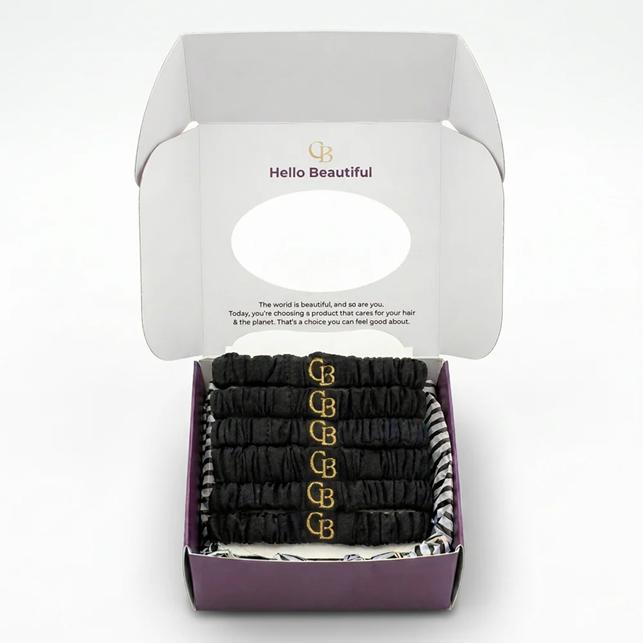
Ciao Bella took a different path with the Hair Halo™. The fabric is upcycled pineapple fiber, blended with organic cotton, around an inner thread of natural rubber. Pineapple leaves get discarded after harvest, so this puts them to work instead of letting them rot in the field.
Three things change when you switch to a plant fiber tie like this one:
- No plastic touches your scalp or your pillow.
- No synthetic rubber pulls at the same hair shaft every day.
- One tie replaces dozens of drugstore packs across a year.
The Hair Halo also has a sweat-activated grip. The natural fibers tighten slightly when wet, which keeps your ponytail in place through hot yoga or a humid commute. The wider weave leaves no crease or dent at the tension point.
The Slow Hair Damage You Can Stop
Hair specialists have a name for the slow damage plastic ties can cause. They call it traction alopecia. The constant pressure on one spot near your hairline causes breakage and thinning over months. Switching to a softer plant fiber tie does not reverse old damage. It does stop the cycle.
Why This Small Swap Matters
A single six-pack of plastic ties puts about 30 grams of plastic into circulation, plus roughly 100 grams of CO2. That sounds tiny on its own. Multiply it by every restock you skip across a decade.
The plastic does not break down. It breaks up. Into smaller and smaller pieces that end up in waterways, food, and eventually back in your body.
Ciao Bella donates 5% of proceeds to the Surfrider Foundation, which is currently supporting the Tijuana sewage crisis cleanup along the San Diego coast.
If you have been quietly suspicious about the plastic pile in your bathroom drawer, that instinct is probably right. Better hair ties, less waste. The switch is small. You wear it every single day.
Pre-order yours at ciaobellacollective.com.

